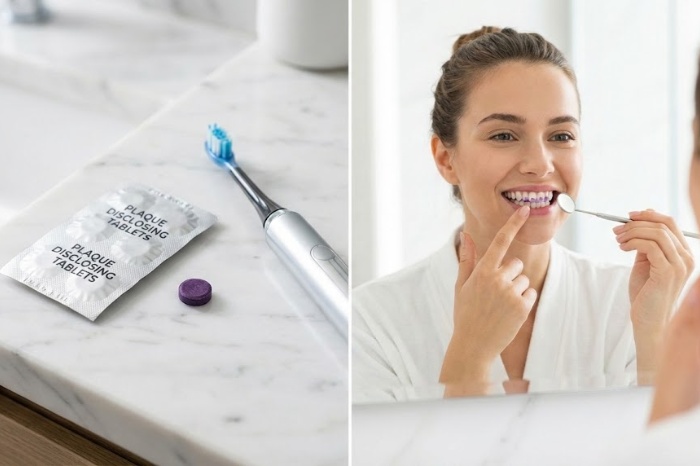
Why do plaque disclosing tablets turn teeth purple?
Published On:
You sell oral care products. You know your customers worry about missing spots when they brush. They want cleaner teeth, but they cannot see the invisible enemy hiding in their mouth. This uncertainty leads to poor hygiene and frustration.
Plaque disclosing tablets use safe, food-grade dyes that react specifically with the proteins found in oral bacteria. The dye clings to the sticky biofilm (plaque) but slides off clean, smooth enamel. This creates a temporary purple stain that highlights exactly where brushing is needed.
As a manufacturer at ITS Dental Care Products, we see the demand for these visual aids growing every year. Distributors and clinics love them because they provide instant proof of efficacy. When a user sees purple, they know exactly what to do. The purple color is not a flaw; it is the product’s most valuable feature. It bridges the gap between guessing and knowing.
Why do plaque disclosing tablets turn teeth purple?
What Are Plaque Disclosing Tablets, Really?
Your customers are fighting a war against an enemy they cannot see. Plaque is colorless. It hides between teeth and along the gumline. Without a guide, even the best toothbrush cannot guarantee a perfect clean.
Plaque disclosing tablets are chewable diagnostic tools made of vegetable dyes that temporarily stain bacterial biofilm. They reveal the accumulation of plaque on teeth surfaces that creates a visual map for better brushing.
A simple explanation (no dental jargon)
Think of these tablets as a highlighter pen for your teeth. When you read a book, you highlight the important parts so you do not miss them. These tablets do the same thing for your mouth. They color the “bad stuff” so you can brush it away.
We manufacture these to be simple. They are not medicine. They do not treat diseases directly. They are strictly educational tools. They show you where the plaque is hiding. Once you see the color, you brush until it is gone. It is a simple cause-and-effect loop that works for everyone.
Who should use plaque disclosing tablets?
These are not just for children. While they are excellent for teaching kids how to brush, the market is much wider.
Orthodontic Patients: People with braces have a very hard time cleaning around brackets. Plaque builds up fast. These tablets are essential for them.
Adults with Gum Issues: If a patient has gingivitis, they are missing spots. The tablets show them where.
The Elderly: Motor skills can decline with age. A visual aid ensures they are still maintaining hygiene.
Gadget Lovers: People buying high-end electric toothbrushes want to test if their device works. These tablets validate their purchase.
Tablets vs. liquids vs. swabs
As a B2B buyer, you need to know which format to stock. Each has pros and cons. We manufacture various forms at ITS Dental Care, but tablets remain the top seller for home use.
| Feature | Tablets | Liquid Solution | Pre-soaked Swabs |
| Ease of Use | High (Chew and rinse) | Low (Needs measuring) | Medium (Direct application) |
| Mess Factor | Low | High (Spills stain sinks) | Low |
| Target Audience | Home Consumers | Dental Clinics | Hospitals/Care Homes |
| Shelf Life | Long | Medium | Medium |
| Cost Efficiency | Best for bulk retail | Good for professional use | Higher cost per unit |
Tablets are dry. They are easy to ship. They do not leak. This makes them the safest bet for retail distribution and e-commerce sales. Liquids are great for dentists who apply it professionally in the chair. But for the end consumer, the tablet is king.
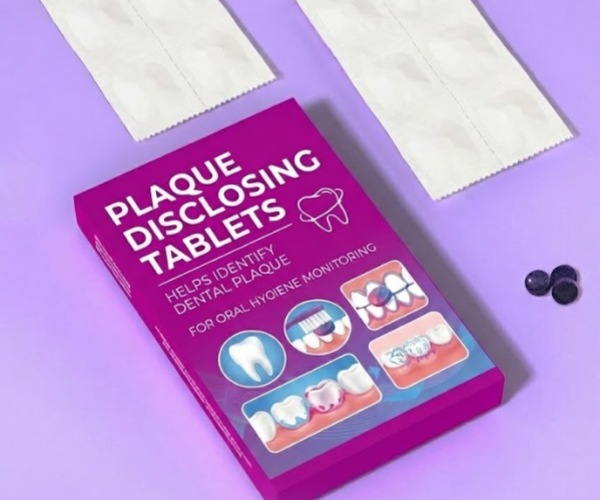
Why Do Plaque Disclosing Tablets Turn Teeth Purple?
Many end-users panic when they see the color. They worry about chemicals. They ask if it is permanent paint. This fear is a barrier to purchase if not explained correctly.
The purple color comes from specific food-safe dyes that form a chemical bond with the structural matrix of the plaque. The dye molecules get trapped in the sticky layer of bacteria, while they simply wash off the slippery, mineralized surface of clean tooth enamel.
The role of food-grade dyes
We are very careful with our ingredients. Safety is our priority at ITS Dental Care. The dyes used are almost always vegetable-based or approved food colorings.
Commonly, we use Erythrosine (FD&C Red #3) or Phloxine B. These are the same types of colorings you might find in sweets, sodas, or cake icing. They are not harsh industrial chemicals. They are selected because they are biologically safe to put in your mouth.
When we formulate these tablets, we balance the concentration. We need enough dye to show the plaque clearly. But we do not want so much that it stains the lips for days. It is a precise science.
How plaque absorbs color (but clean enamel doesn’t)
This is the main question buyers ask. How does it know what to stain?
It comes down to texture and chemistry.
Enamel: Your tooth surface is highly mineralized. It is hard and smooth. It does not have proteins for the dye to grab onto. When you rinse with water, the dye slips right off.
Plaque: This is a biofilm. It is a sticky community of bacteria, saliva proteins, and food debris. It is like a sponge. The dye soaks into this sponge. The dye molecules bind to the proteins in the bacteria.
So, the tablet is not “painting” the tooth. It is dyeing the blanket of bacteria sitting on top of the tooth. If there is no blanket, there is no color.
Why purple is the most common color used
You might see red tablets. You might see blue ones. But purple (often a mix or a specific two-tone dye) is the industry standard for a reason.
Contrast: Teeth are white-ish. Gums are pink. If we used a pink dye, it would blend in with the gums. If we used yellow, it would look like natural tooth discoloration.
Visibility: Purple stands out aggressively against both the white enamel and the pink gum tissue. It is impossible to ignore.
Depth: Dark purple creates a strong shadow effect. It makes the plaque look “dirty,” which psychologically motivates the user to scrub it off.
From a manufacturing standpoint, purple dyes are also very stable. They have a long shelf life and do not fade easily in the packaging. This ensures that when your customer opens the box two years later, the product still works perfectly.
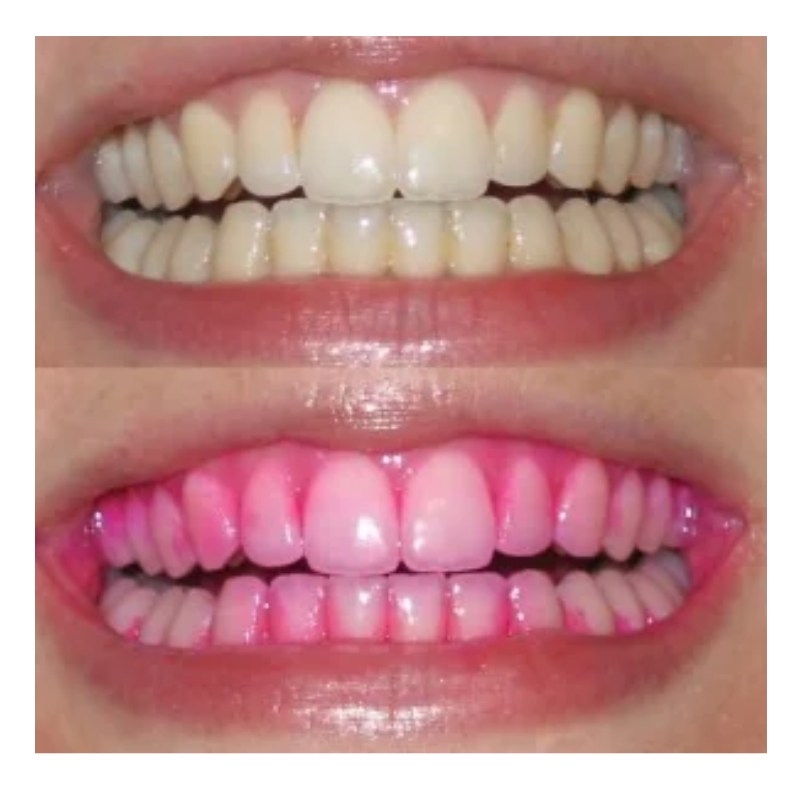
What Does Purple Plaque Actually Mean?
Consumers think all plaque is the same. It is not. The color of the stain can tell a story about the history of that bacteria. This is a huge selling point for advanced two-tone tablets.
Purple plaque usually indicates older, more mature bacterial colonies that have been on the teeth for more than 24 hours. This “old” plaque is thicker, more acidic, and more dangerous to the tooth surface than fresh plaque.
Fresh plaque vs. old plaque (color differences)
We produce “Two-Tone” disclosing agents. These are very popular in the B2B market because they offer more value to the user.
Pink/Red Stain: This represents new plaque. It is thin. It formed recently, likely since the last meal. It is easy to remove.
Purple/Blue Stain: This is the dangerous stuff. It has been there for at least 24 to 48 hours. It has structured itself into a strong colony. It is harder to brush off.
When a user sees purple, they know they missed that spot yesterday, and the day before. It is a wake-up call. It means their current brushing routine is consistently failing in that specific area.
Purple vs. red vs. blue stains explained
Let’s break down the diagnostic codes for your customers.
Red/Pink: This is “young” plaque. It is less harmful but needs to go.
Purple/Blue: This is “mature” plaque. It is high risk. It produces more acid. This acid causes cavities. It also irritates gums, leading to gingivitis.
Light Blue (in some formulas): This can sometimes indicate high-risk acid production areas.
As a distributor, you can market the two-tone tablets as a “professional grade” check-up at home. It justifies a higher price point than single-color tablets because it provides more data to the user.
Why some areas stain darker than others
You will notice the stain is not even. It is usually darkest at the gumline and between teeth.
Why? Because mechanical friction (chewing food, talking) cleans the smooth surfaces of teeth naturally. But the gumline is a sheltered harbor. Bacteria hide there. They build thick layers.
The thicker the layer of plaque, the more dye it absorbs. A deep, dark purple line along the gums means there is a thick wall of bacteria irritating the tissue. This is exactly where gum disease starts. By showing this intensity, the tablet directs the toothbrush to the most critical zone.
| Stain Color | Plaque Age | Risk Level | Action Needed |
| Pale Pink | < 24 Hours | Low | Normal Brushing |
| Dark Purple | > 48 Hours | High (Cavity Risk) | Intense Brushing & Flossing |
| Blue | > 48 Hours | High (Gum Disease Risk) | Focus on Gumline |
| No Color | None | Zero | Keep up the good work |
Are Purple Teeth After Using Disclosing Tablets Safe?
Safety is the first question any procurement officer asks us. You cannot sell a product that causes harm or allergic reactions. We understand this liability concern deeply.
Yes, the purple stain is completely safe. The dyes are non-toxic, temporary, and pass rigorous health safety standards. While the color looks dramatic, it is merely a surface reaction that does not penetrate the enamel or harm the body.
Are the dyes harmful?
At ITS Dental Care, we adhere to strict manufacturing standards. The dyes we use are ingested by people every day in candies and drinks.
The quantity of dye in one tablet is very small. It is just enough to stain the film on the teeth. It is not enough to cause systemic issues.
However, we always recommend checking the ingredient list for specific allergies. Some red dyes (like Red #3) are iodine-based in some regions, though most modern formulas are adjusted for universal safety. As a B2B partner, we can provide you with full MSDS (Material Safety Data Sheets) documentation. This transparency helps you sell with confidence.
Is it safe for kids, adults, and denture wearers?
Kids: Absolutely. In fact, they are the primary users. The only risk is them swallowing the whole tablet (choking hazard) or swallowing the spit (mild stomach upset if they eat too many). We recommend supervision for children under 12.
Adults: Yes. It is safe for pregnant women and nursing mothers too, as the dye is not absorbed into the bloodstream in significant amounts.
Denture Wearers: This is tricky. The dye is safe for the person, but it can stain the acrylic of dentures permanently. We advise denture wearers to remove their dentures before chewing the tablet, or to ask their dentist for specific instructions.
How long the color usually lasts
This is a common consumer worry: “Will I go to work with purple teeth?”
The answer is no, if they brush. The dye is designed to be temporary. It relies on the plaque to stick. Once the plaque is removed, the dye goes with it.
If a user brushes and still sees purple, it means the plaque is still there. It does not mean the tooth is stained; it means the tooth is still dirty. However, soft tissues like the tongue and lips might stay pink for a few hours. This is why we recommend using the tablets at night. By morning, saliva will wash away any remaining color on the tongue.
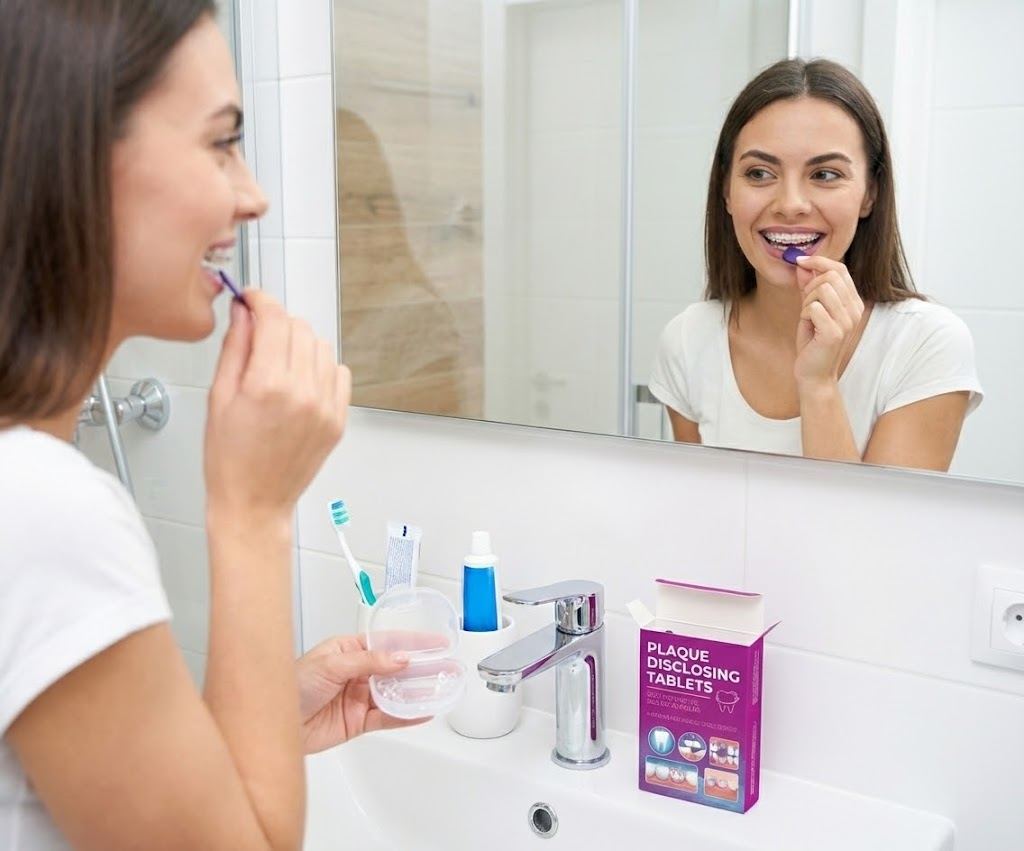
How to Remove the Purple Color After Using Disclosing Tablets
Your customers might worry that the stain is permanent. This fear stops them from trying the product. You need to reassure them that removal is the whole point of the exercise.
Removing the purple color is simple: you just brush it off. The dye is attached to the plaque, so when you mechanically remove the plaque with a toothbrush and floss, the color disappears. If the color stays, you need to keep brushing.
Brushing techniques that work best
The tablet reveals the user’s bad habits. Usually, people scrub back and forth hard. This misses the gumline where the purple dye hides.
To remove the purple line, the user must use the Bass Method:
Angle the brush at 45 degrees towards the gums.
Use small, circular motions.
The bristles need to slide slightly under the gumline.
This is a great cross-selling opportunity. You can bundle these tablets with high-quality toothbrushes or electric brush heads. The tablet proves the need for a better tool.
Toothpaste ingredients that help remove stains
Standard toothpaste is usually sufficient. However, the abrasive quality matters.
Mild Abrasives: Silica or calcium carbonate in toothpaste helps scrub the stained biofilm off.
Whitening Pastes: These work well because they are slightly more abrasive and contain chemical agents to break down bonds.
We do not recommend using just water. The mechanical action of the brush combined with the surfactant (soap) in the toothpaste is necessary to lift the sticky, dyed plaque.
What not to do (common mistakes)
We see users make these errors, and then they complain the product “stains too much.”
Don’t scrub the gums until they bleed. If the purple is on the gums, be gentle.
Don’t forget to floss. The purple dye will settle between teeth. A brush cannot reach there. Only floss can remove the purple line between contacts.
Don’t use it right before a date. As mentioned, the tongue stays pink. Timing is everything.
Why Dentists Recommend Plaque Disclosing Tablets
Why do professionals love this product? Because it saves them time. It stops the arguments. Patients often deny they have poor hygiene. The tablet provides objective evidence.
Dentists recommend these tablets because they provide immediate, undeniable visual feedback. They bridge the gap between knowing how to brush and knowing where to brush, significantly improving patient compliance and oral health outcomes.
How they improve brushing habits
We are creatures of habit. We brush the same way every day. We miss the same spots every day. A dentist can tell a patient to “brush better,” but that is vague. When a patient sees a purple molar in the mirror, the feedback loop is closed.
Before: “I think I brushed well.”
After: “I see I missed the back left molar.”
This corrects muscle memory. After using tablets for a week, the hand learns to reach that difficult spot automatically.
Why visual feedback works better than advice alone
Humans are visual learners. You can read about plaque. You can listen to a lecture about gingivitis. But seeing your own teeth glowing purple triggers a stronger psychological response.
It is the “Gross Out” factor. No one wants a dirty mouth. When the invisible becomes visible, the motivation to clean it skyrockets. This is why these products have such a high repurchase rate. Once a user sees the truth, they want to maintain that level of cleanliness.
Real-life examples from dental clinics
We supply many clinics directly. We hear stories all the time. One hygienist told us about a teenager with braces who refused to brush properly. His gums were swelling. The dentist gave him a pack of our tablets. The next month, his hygiene was perfect. The boy admitted he didn’t realize how much food was stuck in his brackets until it turned purple.
This is the value you are selling. You are not selling a dye. You are selling a solution to dental decay and costly dentist bills.
Using Plaque Disclosing Tablets at Home: Step-by-Step
If instructions are complicated, people won’t use the product. We design our packaging to be intuitive. But as a distributor, you should educate your buyers on the workflow.
Using the tablets is a simple 5-minute process: Brush first, chew the tablet, rinse with water, examine the purple spots, and then brush again to remove the stain. This “test-drive” of your brushing skills ensures a perfect clean.
How often should you use them?
We do not recommend using them every single day. It is unnecessary and can be messy.
The Sweet Spot: Once a week.
The Strategy: Treat it as a weekly audit. Pick a specific night, like Sunday night. Check your brushing. If you see less purple than last week, you are winning.
This frequency ensures a box of 10 or 20 tablets lasts a customer for months, making it a high-value, low-cost investment for them.
Best time of day to use disclosing tablets
Always at night.
Why?
** tongue staining:** The tongue and lips will look pink for a while. You sleep it off.
Deep Clean: Nighttime brushing is the most important. Saliva flow drops while you sleep, making teeth vulnerable to acid. A perfect clean before bed is crucial.
Tips for first-time users
To ensure your customers have a good first experience, pass on these tips:
Vaseline on lips: Apply a thin layer of lip balm or petroleum jelly before chewing. This prevents the dye from staining the lips.
Rinse well: After chewing, swish water vigorously. You want to wash away the excess dye saliva so only the plaque remains colored.
Old clothes: Don’t wear a white silk shirt. Drool happens.
| Step | Action | Why? |
| 1 | Brush Normally | Remove the easy plaque first. |
| 2 | Chew Tablet | Release the dye. |
| 3 | Swish & Spit | Coat the teeth, remove excess. |
| 4 | Inspect | See where you missed. |
| 5 | Brush Again | Remove the purple (the stubborn plaque). |
Common Questions People Ask About Purple Teeth Stains
Uncertainty kills sales. Your B2B clients need to know the limitations of the product to handle their customer complaints.
Most questions revolve around compatibility with dental work. While disclosing tablets are safe for natural teeth, porous materials used in some older dental appliances can absorb the dye. Modern ceramics are generally resistant, but caution is always advised.
Can disclosing tablets stain crowns, dentures, or retainers?
Porcelain Crowns/Veneers: Generally safe. Glazed porcelain is like glass; it doesn’t stain.
Composite Bonding: Usually safe, but if the bonding is old and rough, it might pick up some color.
Retainers/Aligners (Invisalign): NEVER chew the tablet while wearing these. They will turn permanently pink. Take them out first.
Dentures: As mentioned, remove them. The artificial gum acrylic is porous.
Do they work with electric toothbrushes?
Yes, they are the perfect companion. Electric toothbrushes are powerful, but only if you put them in the right place. Users often just hold the brush in one spot. The tablet shows them they need to move the brush head along the gum curve.
Many toothbrush manufacturers actually bundle our tablets with their starter kits for this reason.
Can plaque disclosing tablets expire?
Yes, like any product with food-grade ingredients. However, because they are dry compressed powder, the shelf life is very long—typically 2 to 3 years if kept dry. Moisture is the enemy. If the blister pack is punctured, humidity will ruin the tablet. As a buyer, you should check the manufacturing date, but rest assured, this is not a perishable good like liquid dairy. It is stable inventory.
Final Thoughts: Purple Teeth Are a Good Thing
We want to change the narrative. Purple teeth are not scary. They are smart.
The purple stain is a temporary inconvenience for a permanent gain. It teaches users the geography of their own mouth. By identifying and eliminating the purple spots, your customers are preventing cavities, saving money, and taking control of their health.
What purple stains teach you about oral care
The stain teaches us that we are not as good at brushing as we think. It is a humble reality check. But it is also empowering. Once you know where the problem is, you can fix it.
How to turn this into better daily cleaning habits
For you, the retailer or clinic, this is an opportunity to sell a system, not just a product. You are selling “The Perfect Clean.” Encourage your customers to use the tablets. When they see the purple, they will buy better floss. They will buy better brushes. They will trust you as the expert who helped them solve a problem they didn’t even know they had.
If you are ready to stock high-quality plaque disclosing tablets for your business, or if you need custom branding options, contact us today. At ITS Dental Care, we are ready to supply the tools your customers need for a healthier smile.

Get in Touch with Us
Have questions or need more information? Contact us today, and our dedicated team will assist you promptly.


We are a trusted manufacturer of high-quality denture care products, including denture cleaning tablets, adhesive creams, and retainer cleaning solutions, offering customized services for global partners.