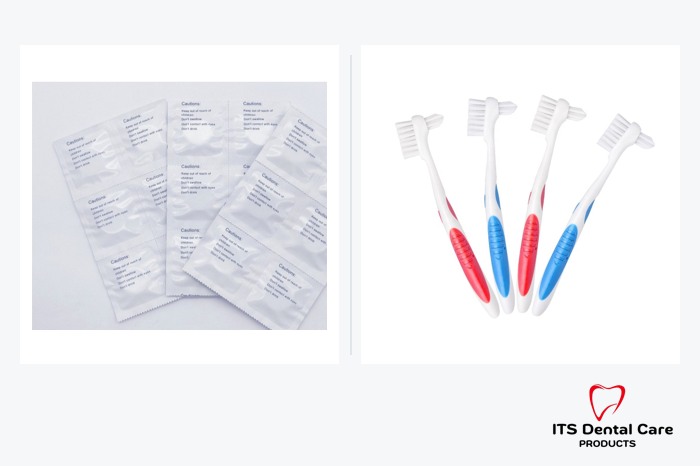
A practical denture-care assortment has a suitable denture cleanser and a brush at its core. Adhesive cream or cushions belong on a separate, patient-specific line. Clinics and care homes may need different pack sizes, instructions and stock controls, so a distributor should define the users and ordering route before combining products in a catalog. ITS Dental offers denture cleaning tablets, denture brushes and denture adhesive products as separate product lines; a combined order needs an itemized quotation rather than an assumed ready-made kit.
This guide is for distributors and private-label buyers supplying dental practices or residential care. A single care home buying a few packs may be better served through its usual distributor. For ITS Dental's existing-formula private-label denture cleaning tablets, the current product page states a 5,000-retail-box minimum with customer-branded outer packaging. Other product quantities and combined shipping terms need their own quotation. That distinction helps a buyer decide whether factory-direct sourcing fits the expected demand.
Start with the care task, then choose the product line
Daily denture care involves mechanical cleaning, a cleanser appropriate to the denture and an individual routine that staff or patients can follow. The Oral Health Foundation's updated denture-care guidance describes brushing with a soft denture brush, using a suitable cleanser according to its instructions and rinsing the denture before it goes back in the mouth. It also stresses the different needs of full and partial dentures. These are care principles, not evidence that every ITS formula suits every denture material.
Build the purchasing list around roles rather than a generic “three-item kit.” A brush supports mechanical removal of debris. A cleanser provides a defined soaking step when suitable for the appliance. Adhesive addresses retention for a particular wearer after the fit has been assessed. A labelled storage container may also be needed in a shared-care setting, but it should be sourced and specified separately unless a supplier explicitly quotes it.
| Line to evaluate | Why a buyer may stock it | Decision before approval |
|---|---|---|
| Denture brush | Daily mechanical cleaning | Head shape, grip, bristles, individual issue and replacement plan |
| Denture cleanser | Soaking step for an approved denture type | Formula, material compatibility, directions, pack protection and evidence for claims |
| Adhesive cream | Retention support when clinically appropriate | Wearer need, fit review, instructions, ingredients and removal routine |
| Adhesive cushion | Alternative format for a selected wearer | Shape, intended use, instructions and professional suitability review |
| Storage container | Identified, clean storage in a facility | Resident labelling, cleaning, size and local purchasing source |
This table is a planning framework. It does not mean ITS supplies every line as one assembled pack or that every resident should receive an adhesive. A clinic's professional advice and each product's approved instructions control patient use.
Plan a clinic assortment around the appointment and take-home handoff
A dental clinic may use a brush or cleanser during instruction and provide a patient with a suitable take-home option. The purchasing question is whether staff can explain and replenish the exact item they hand over. Ask the clinical lead to approve the intended denture types, cleaning directions and any caution for metal components, implants or remaining natural teeth. A product page that says “denture” is not enough to establish compatibility with every appliance.
For a practice buying through a distributor, a useful catalog entry identifies the SKU, unit count, directions, lot/date location and the contact for product questions. It should distinguish a sample used in a demonstration from the pack sold or given to the patient. If the pack changes, the instructions and approval record may need review. This is especially relevant when a distributor adds its own branding or a local-language insert.
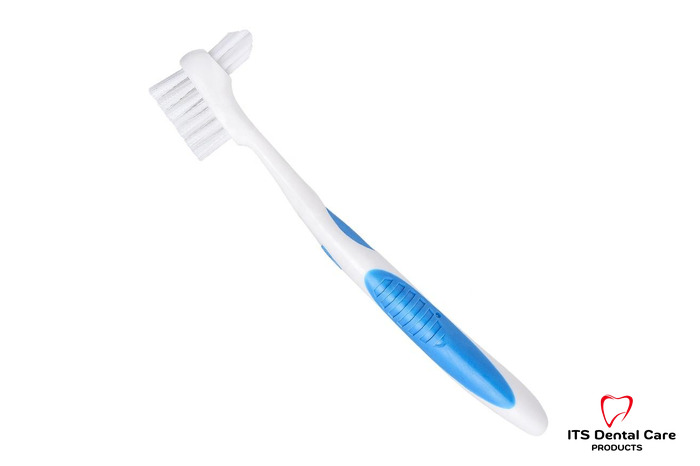
ITS Dental's denture brush product shows a dual-head format, while its denture cleaning tablet page describes an existing-formula private-label route. The buyer still needs the current specification and sample for each SKU. We should not transfer a brush claim, cleanser performance statement or pack count from one product to another.

Plan care-home supply around the resident and the staff routine
Care homes need products that fit a resident's documented care plan and a repeatable staff routine. The NICE quality standard for mouth care in care homes calls for support with daily denture care, including cleaning and overnight removal when needed. The US HRSA guidance for professionals caring for older adults likewise describes removing, brushing, storing and rinsing dentures. Neither source establishes an ITS-specific treatment claim.
The distributor's assortment should make individual issue and replenishment practical. Consider how a resident's brush and storage container are identified, where instructions will be kept, who tracks opened stock and how a lost denture or damaged package is reported. A carton count alone does not answer these operational questions. The care team should determine which residents can manage their own routine and who needs assistance.
Full and partial dentures can require different advice. Where a person still has natural teeth, those teeth need their own brushing routine. Do not present a denture cleanser as a substitute for cleaning natural teeth. Where metal clasps or other materials are involved, ask the dental professional and supplier to confirm the cleanser's suitability for that specific appliance before it becomes a standard facility item.
A distributor can make the facility's choice easier by separating a core cleaning line from optional resident-specific products in its catalog. The care team can then order the brush and cleanser that fit its routine while recording why any adhesive is supplied for a particular person. This arrangement also prevents a change in one item from silently changing the other items. If staff report staining, a damaged brush, an unclear instruction or a missing denture, the lot and item code should identify the product involved. The distributor's role is to provide traceable stock and usable information; the care team and dental professional decide the resident's care plan.
Keep adhesive products as a separate decision
Denture adhesive is a conditional product line. The American Dental Association's denture-care overview says adhesive should not be used to compensate for a poorly fitting denture, which may need professional adjustment or replacement. It also describes removing adhesive during daily cleaning. A buyer should therefore avoid putting adhesive into every resident's default pack without a care decision.
ITS Dental lists denture adhesive cream and adhesive cushions as different product categories. They should be compared by intended user, form, ingredient declaration, pack count and approved directions rather than by an unsupported promise of hold time or comfort. For a care-home distributor, the practical question is how staff will identify the right product for a resident and know when to refer fit problems back to a dentist.
An adhesive order also needs a removal and replenishment plan. Confirm the actual SKU, label language, storage and lot information, then obtain the current product records for the destination market. No universal “best adhesive” or single pack mix follows from this assortment guide.
Specify the cleanser pack and replenishment unit
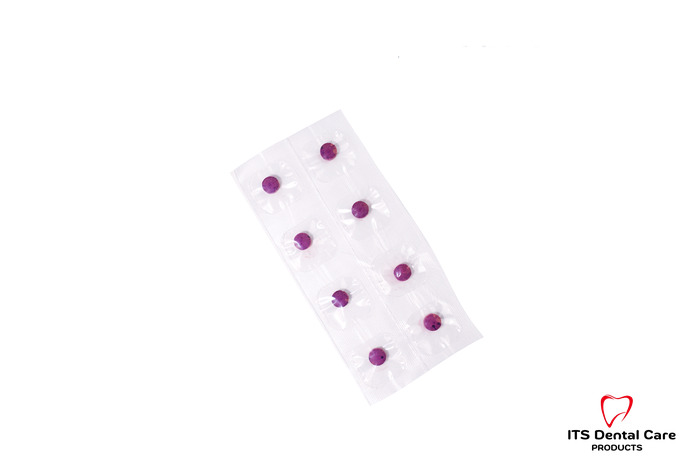
For a distributor or private-label brand, the first choice is the product route. ITS Dental's current standard-formula tablet offer starts at 5,000 retail boxes with customer-branded outer packaging; a newly developed formula is a separate project. The custom-formula product page explains that distinction. Do not use a minimum from one route as the minimum for brushes, adhesive or an unconfirmed combined order.
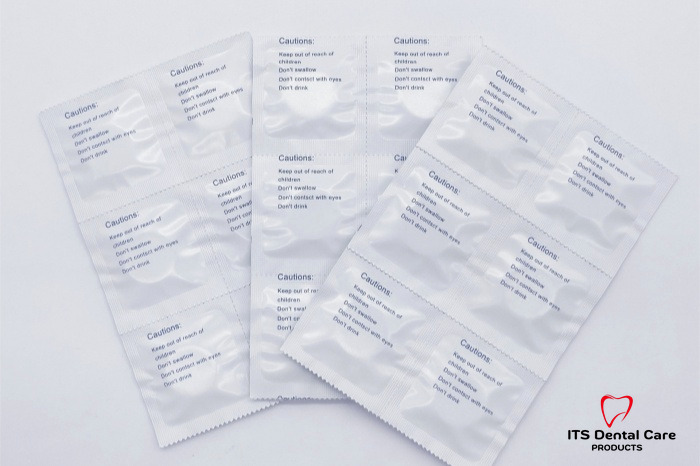
The buyer should define tablets per retail box, immediate pack, outer-carton quantity, storage conditions and the language of use directions. A care-home program may need easy stock counting and a clear place for lot/date coding; a clinic handout may prioritize a pack patients can understand at home. Ask for the current foil and box specification before approving artwork or a purchasing forecast. Avoid assuming a photo proves moisture protection or shelf life for every SKU.

The product's supported claims should travel with the exact formula and directions. Request the ingredient declaration, product specification and any test reports that support the proposed label in the intended market. A claim printed on a different pack or tested under different conditions is not automatic evidence for the ordered SKU.
Build an itemized purchasing brief
A buyer can compare offers more reliably when each product line has its own identity and unit. Start with the intended customer channel, destination countries and projected order pattern. For each candidate, record the SKU, sample reference, unit count, packaging, label language, evidence needed for claims, quote basis and replenishment assumptions. Then ask whether separate lines can share a shipment and what the actual commercial terms would be. Do not describe combined shipping as agreed until it appears in the quotation.
For a clinic program, describe whether staff will demonstrate the product or hand it to patients. For a care-home distributor, describe resident-level issue, storage and the staff instructions needed. These details help select pack formats without inventing a preassembled “care-home kit.” A product that is feasible as a distributor order may be a poor direct-factory purchase for one small facility.
Send ITS Dental the products and quantities you want quoted separately, along with target markets, intended users and any sample or document questions. Our contact form is the place to start an itemized discussion. We can then identify the current specifications and terms for the selected products rather than treating a catalog illustration as a confirmed bundle.

ITS Dental makes denture-care products and discusses product and packaging requirements with B2B buyers.