
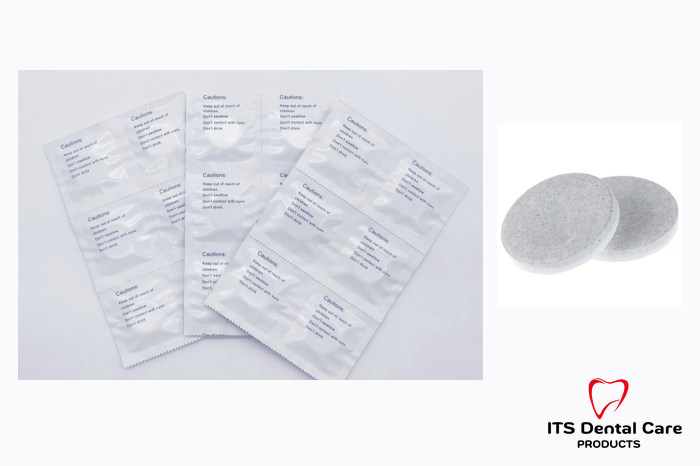
Choose a denture cleaning tablet pack size by how quickly buyers will use or sell the tablets and how often they can reorder. For retail, pick a count that suits the shelf price, expected time between purchases and the number of boxes stores can sell before the next delivery. For a care home, estimate how many tablets staff will issue between deliveries, then round up to the supplier’s actual order unit. Compare quotes per tablet and record both the tablet count per pack and the pack count per shipping case.
Separate the tablet, retail pack and shipping case
A pack size describes the number of tablets in the box or tube someone buys. The case pack tells your receiving team how many of those units arrive in one shipping carton. A foil strip can hold several separately wrapped tablets, so counting strips alone can misstate the quantity. Record tablets per strip when the supplier uses strips, strips per retail box, and retail boxes per case. For a tube, start with tablets per tube and specify whether the tube ships by itself, in a retail box or inside a multipack.
The distinction shows up in real catalogs. Dynarex lists 40 tablets per box and 24 boxes per case for item 4877, or 960 tablets in all. Italian distributor Nuova Moggia lists a Denthoral case with 24 tubes of 30 tablets, or 720 tablets. Each case contains 24 inner packs, but the tablet totals differ by 240. See the Dynarex product catalog and Nuova Moggia case listing.

For retail, size the pack around a repeat purchase
Start with the shelf price your channel can support and the expected interval before a shopper needs another pack. If the directions call for one tablet per cleaning and you model one cleaning a day, 30 tablets cover 30 uses and 60 cover 60 uses. Use the label when planning how the shopper will use and store the product. If two products have different directions, estimate the number of cleanings using each product’s own instructions.
Next, check how long the retailer will hold a case. At an assumed two packs sold per store each week, a case of 24 packs covers roughly 12 weeks of sales if one store takes the whole case. A distributor that can split cases across four similar stores could send six packs to each store for about three weeks of sales. That change in distribution can solve a slow stock turn without changing the retail pack count. Run the calculation again with the sales rate your buyer expects for each candidate SKU.
When choosing between one launch size and a second size, decide what the second one would do. A lower shelf price may make a smaller pack easier for a first purchase. A larger pack may fit a channel where shoppers routinely buy enough for several weeks and have space to store it. Check the retailer’s shelf measurements, sales of comparable items and replenishment policy before committing to a second carton print run.
For an online order, compare a larger pack with a bundle of existing sealed packs if the retailer supports bundles. A bundle lets you use the same base pack for single and multi-unit orders. A larger pack can suit a retailer that needs one retail unit with one declared count. Price both with the actual parcel dimensions and check how the retailer lists the unit a shopper will receive.
For care homes, calculate the quantity staff can issue
Base the order on scheduled use and the delivery interval. Count the residents who use the selected product, use the planned quantity from the applicable directions, then subtract stock that can actually be issued. Keep a reserve that fits your facility’s policy and the reliability of its deliveries. Where staff assign supplies to individual residents, check whether those units are available to the wider stockroom before adding them to usable stock.
| Example for a 14-day order cycle | Calculation | Tablets |
|---|---|---|
| Planned issue for 24 residents at one tablet per day | 24 × 14 | 336 |
| Add the example reserve | 336 + 48 | 384 |
| Deduct stock available to issue | 384 − 64 | 320 |
| Order in boxes of 30 if sold by the box | Round 320 ÷ 30 up to 11 boxes | 330 |
| Order in boxes of 40 if sold by the box | 320 ÷ 40 = 8 boxes | 320 |
Use your own stock and usage records in place of the example. If the supplier sells only full cases, round up in cases and check how long the extra stock will sit before use. Ask the distributor whether it can replenish in smaller quantities if a full case takes more storage space or covers more weeks than the facility can handle. Confirm how staff will keep instructions and lot or date information with the product when retail boxes are opened for issue.
Check the remaining shelf life at delivery against the time the stockroom expects to use up the order. If deliveries are irregular, base the reserve on the longest recent gap you need to cover. If a larger case leaves the facility with stock it cannot issue before the labeled date, shorten the delivery interval or choose a smaller order unit.
Compare quotes using the same unit and destination
Divide the landed cost of a case by the number of tablets in it after matching freight terms, destination and services included. Use the same basis if the supplier quotes per retail pack. In an illustrative comparison, a landed cost of $3.60 for 30 tablets comes to $0.12 each. A landed cost of $6.60 for 60 tablets comes to $0.11 each. The larger pack saves one cent per tablet at those inputs and ties up $3 more per retail unit. Put your own cost and turnover figures into the comparison.
Ask for the case dimensions, gross weight, packs per case and minimum order in the unit the supplier uses. Those figures let a distributor compare warehouse space and get a freight estimate. Check which unit your buyer can reorder, too. A favorable factory cost per tablet is less useful to a facility that buys one box a week from a local distributor.
Put the chosen count on the quote and the pack proof
Write the selected count in full on the purchase order and the approval sample record. Confirm the same count on the retail pack proof and in the buyer’s product listing. On the shipping side, reconcile the pack count with the case label, case quantity on the packing list and the wholesaler’s item record. If you change the declared net count or the number of units in a case, review the relevant GS1 GTIN rules for the affected packaging levels before approving the artwork. GS1 GTIN Management Standard.
Use the denture tablet packaging specification guide once the pack count is set. It covers the material, coding and drawing details needed to finish the pack.
Confirm the available count for your order
ITS lists 30 tablets per tube on its tube-packed denture tablet page. For foil-packed tablets with the existing formula, our denture cleaning tablet product page lists a starting order of 5,000 retail boxes with customer-branded outer packaging. Confirm the number of tablets in that box and the case quantity against the quotation.

When you have a target count, include the destination market, sales or care channel, order volume and desired packs per case in your quote request. If you are comparing two pack sizes, list them on separate lines so both quotes can be compared per pack, per case and per tablet.

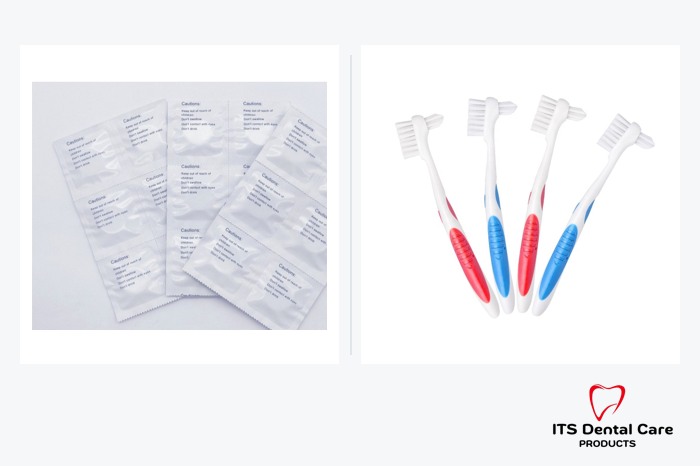
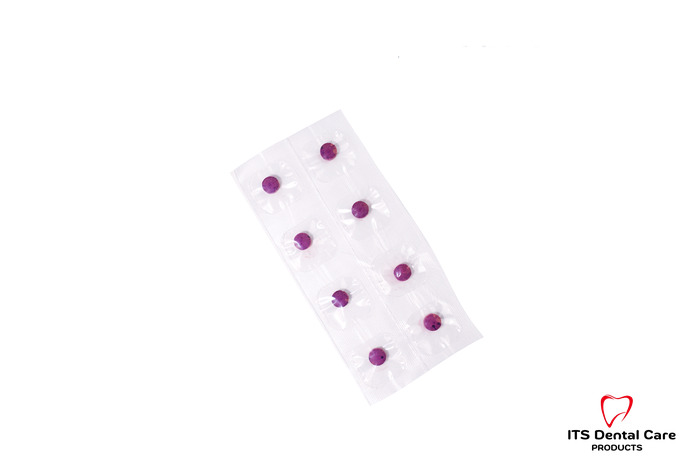


ITS Dental makes denture-care products and discusses product and packaging requirements with B2B buyers.