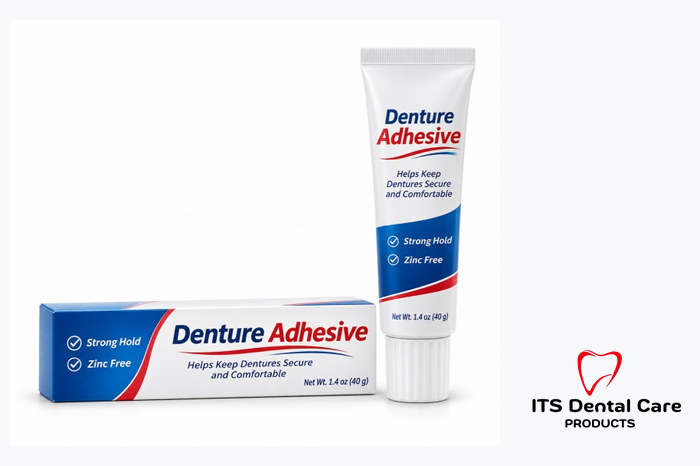
A denture adhesive cream specification should let your team identify the exact formula, tube, label, sample and release evidence before a private-label order. A product photograph or a promise of “strong hold” cannot settle those choices. Our denture adhesive cream product page lists a zinc-free cream, a laminated tube and several net-weight options. Use those published options as a starting point, then agree the version you will actually buy and the proof needed for your market.
Define the product version before comparing quotes
Start with a version-controlled specification, not a generic product name. Record the formula identifier, intended users, net weight, tube construction, flavor or fragrance choice if applicable, and the proposed selling market. Ask whether the sample, artwork and quote all refer to that same version. A change to one of these fields can make a previous sample or label review irrelevant.
The ITS product page currently lists a zinc-free, PVM/MA copolymer cream with a smooth pink appearance. It also lists 15 g, 20 g, 40 g and 70 g net weights and an aluminum laminated tube. These are published options, not a promise that every formula and tube combination is available on identical terms. A buyer should request the current specification and confirm the chosen combination before printing artwork or comparing supplier quotes.
For a new brand, the practical decision is often which one version to approve first. A 40 g tube pictured on a product page does not approve a 20 g tube automatically. The smaller pack may require a different tube, filling setup, carton dimensions and label space. Keep separate approval records for each size and any formula variation.
The same discipline matters when a buyer compares two offers. If one quote assumes a stock pink cream in a 40 g printed tube and another assumes a new fragrance in a 20 g tube, the quoted prices do not describe the same deliverable. Put formula, net weight, primary pack, carton, artwork responsibility and intended market on the first page of each comparison. Ask both suppliers to mark any field they cannot yet confirm.

Turn the specification into an approval sheet
Separate what the supplier publishes, what your team must choose, and what remains to be proven. The following sheet is a buyer checklist, not ITS batch-release criteria. Leave acceptance limits blank until the relevant formula, method and market documents are reviewed. A precise blank is safer than a copied number with no product-level basis.
| Decision field | Published ITS starting point | Buyer approval record |
|---|---|---|
| Formula identity | Zinc-free cream; PVM/MA copolymer is named on the product page | Exact formula or revision, ingredient statement and market review |
| Appearance | Smooth pink cream is listed; customization is mentioned | Approved sample appearance and any permitted variation |
| Net weight | 15 g, 20 g, 40 g and 70 g are listed | One selected size per SKU, with its stated unit |
| Primary pack | Aluminum laminated tube is listed | Tube drawing, cap, seal, print area and approved sample |
| Performance wording | Product page contains hold-related marketing wording | Claim-specific method, results, conditions and approved label text |
| Shelf life and release | Product page states a shelf life | Formula- and pack-specific stability evidence, test list and lot record |
Treat the last two rows as evidence requests. This article does not establish an ITS adhesive hold-time result or transfer the three-year shelf life confirmed for certain foil-packed denture cleaning tablets to adhesive cream. If a claim or shelf-life statement is needed on your pack, approve its exact scope using the matching adhesive formula and packaging records.
Review the tube as part of the product
The tube is more than a graphic surface. Net weight, dispensing opening, cap, seal, laminate, crimp and carton affect how the cream reaches the wearer and how a retailer handles the SKU. Ask for an approved tube drawing and a physical filled sample. On that sample, check whether the printed text remains legible, the cap closes properly, the seal and crimp are intact, and the declared net weight matches your purchase specification. Agree how any defect will be recorded before production.
If you change tube size, repeat the checks that depend on pack geometry. A label approved on a larger tube may become cramped on a smaller one. Carton copy and transport packing also need to point to the same SKU. Do not use a generic carton photograph as proof of the exact tube construction or fill quantity being ordered.
For a retailer, scan the package as a shopper would: can the product identity and net quantity be read at shelf distance, and are directions and warnings legible on the actual tube? For a distributor, compare the tube and carton identifiers with the master SKU record and the outer shipping carton. These checks do not replace laboratory or regulatory approval. They catch mismatches that a formula test would never reveal.
For private label artwork, keep a single approved file version and identify who signs off the ingredient text, directions and market-specific statements. Our denture-care artwork approval checklist covers that document-control decision in more detail. This article concentrates on the adhesive cream's product specification.
Match claims and instructions to evidence
“Zinc-free,” “strong hold,” “all-day hold” and similar phrases answer different questions. The formula record can support an ingredient statement only when its scope matches the SKU. A duration or performance claim needs its own test design, conditions and results; a photograph of a retail box does not establish the result. Ask for the exact claim language you plan to print, the test method, the product version tested and any limits on the conclusion.
The U.S. FDA's denture adhesive guidance explains why clear use directions and zinc disclosure matter, especially when products could be overused. It does not certify ITS cream or approve a particular label. FDA also notes that adhesive does not correct an ill-fitting denture. Keep use directions and cautions consistent with the intended market and obtain local regulatory review before artwork approval.
The FDA-recognized ISO 10873 standard covers classification, requirements, test methods and instructions for consumer denture adhesives. Recognition of a standard is a useful reference for a buyer's document request; it is not evidence that any particular ITS SKU has passed it. Ask which edition, tests and reports apply to your selected formula.
If a brand wants to compare two creams, define the comparison before seeing results: same denture material, application amount, waiting time, moisture condition, duration, removal method and reviewer. Record whether the outcome is a lab measurement, a trained-panel observation or a consumer perception. Those outputs answer different questions. Avoid translating a laboratory adhesion number into a promise that every wearer will get the same number of hours of hold. A clinician should assess a poorly fitting denture rather than asking the adhesive to compensate for it.
Connect samples, documents and the ordered lot
A useful sample approval record names the formula and pack revision, sample date, net weight, artwork version, evaluation conditions and reviewer. Record what your team actually observed. If feel, dispensing or retention is compared, state the test conditions rather than describing one impression as a guaranteed wearer outcome. Keep photographs of the exact sample and pack that were approved.
Before shipment, agree which records will connect the order to the sample: the purchase specification, approved artwork, lot identification, packaging version and agreed release documents. Whether you request a certificate of analysis, test summary or other paperwork depends on the SKU and the importing market. The document name alone is not enough; check that it identifies the relevant batch and methods.
An importer can keep one evidence folder per approved SKU. Link the signed specification, label revision, market review, approved sample and each later batch record. When a carton label changes, the buyer can then see which version was used for which lot. This is a practical record structure for the buyer to request and maintain; it is not a claim about ITS's current internal document system.
On receipt, compare cartons and tubes with the purchase record. Count units, check pack identity and condition, and isolate mismatches under your own receiving procedure. This is a buyer-side handoff, separate from the pre-shipment inspection guide for denture cleaning tablets; tablet sampling rules should not be copied into an adhesive-cream order without a suitable plan.

Request a quote for one defined SKU
The fastest useful inquiry identifies the selected net weight, formula or zinc-free requirement, market, proposed tube and carton, forecast quantity, artwork status and documents your team needs to review. If you have a target claim, include its exact wording so the evidence question can be answered before label printing. Ask the supplier to state which items are confirmed, which need samples or testing, and which commercial terms depend on the final specification.
Our adhesive cream product page shows the current offer and photographs. Use the contact form to discuss a specific private-label SKU. The 5,000-box minimum published for ITS's existing-formula denture cleaning tablets is a different product route and should not be assumed for adhesive cream; confirm adhesive MOQ in the quote.

ITS Dental makes denture-care products and discusses product and packaging requirements with B2B buyers.