ITS Dental Care Logo
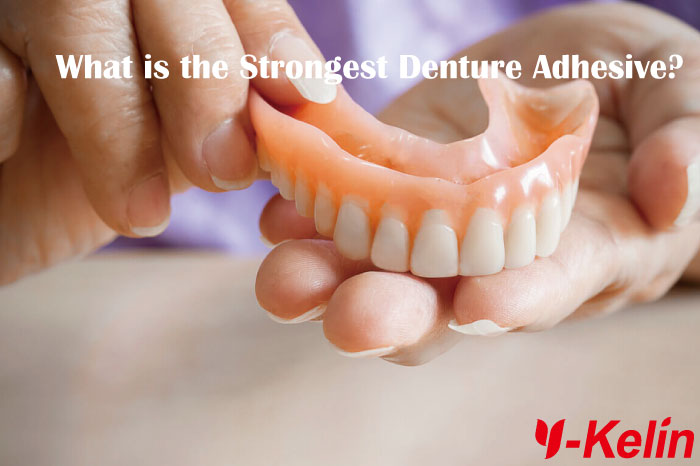
What is the Strongest Denture Adhesive

What is the Strongest Denture Adhesive on the Market?

Published On:

February 28, 2026
ITS Dental Care Products

Every day, thousands of denture wearers search for the same holy grail: “What is the strongest denture adhesive on the market?” For individuals, a reliable, rock-solid hold means the freedom to eat steak, laugh out loud, and speak with absolute confidence without the fear of slipping dentures.

However, for oral care brand owners, pharmacies, and dental distributors, this question represents a product development challenge: How do you formulate, manufacture, and supply an adhesive that genuinely delivers an “extra strong” 12-hour hold while maintaining 100% patient safety?

As a leading OEM/ODM manufacturer of medical-grade denture adhesives at ITS Dental Care, we understand both the consumer’s pain points and the chemistry required to solve them. In this comprehensive guide, we will break down the different types of adhesives, the science of polymer strength, proper application techniques, and how brands can private-label the ultimate zinc-free formula.

Denture Adhesive

Types of Denture Adhesives: Which Format Holds Best?

Before diving into the chemistry, it is crucial to understand that denture adhesives come in three primary formats. Each serves a different purpose, but when it comes to sheer gripping power, there is a clear winner.

Denture Adhesive Creams (The Strongest): Creams or pastes are universally recognized by dental professionals as providing the strongest, most durable hold. Because they are viscous, creams spread evenly across the denture plate, filling in microscopic gaps between the rigid acrylic base and the shrinking jawbone. This creates a powerful, airtight vacuum seal that resists heavy chewing forces.
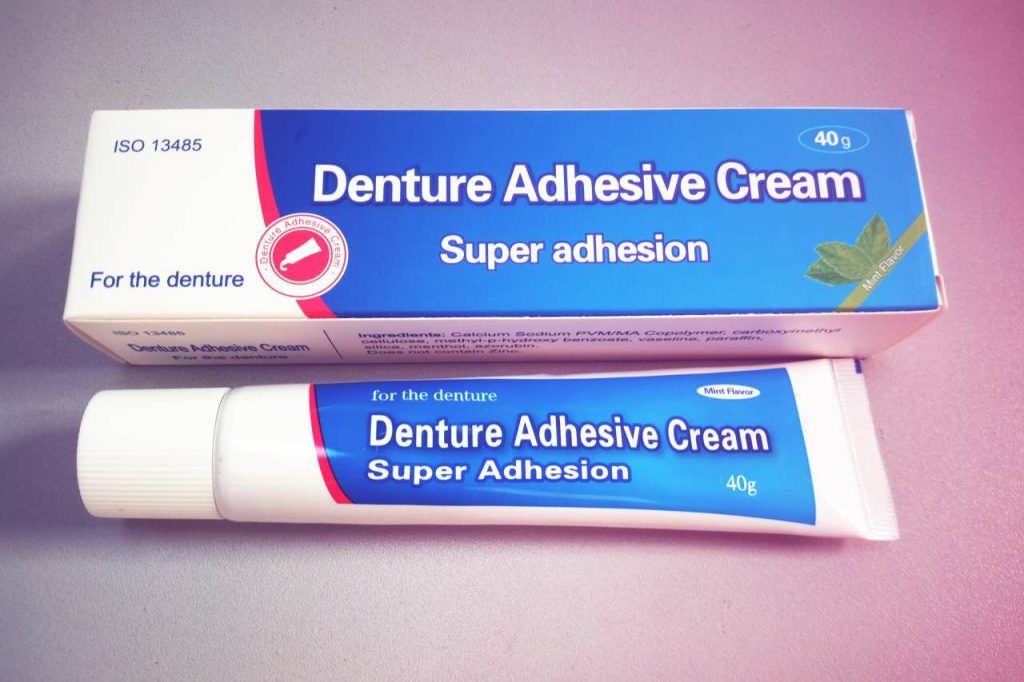
Branded Packaging Cream

Denture Adhesive Powders (Moderate Hold, Less Mess): Powders are sprinkled onto a wet denture. They activate instantly and create a thin, tacky layer. While they are easier to clean and excellent for well-fitting dentures, they lack the bulk needed to fill larger gaps, meaning their shear strength cannot match that of a cream.

Denture Adhesive Powder

Adhesive Cushions or Strips (Comfort-Focused): Strips are pre-cut and placed onto the denture. They are completely mess-free and provide a soft cushion, which is ideal for patients with sore gums or severe bone loss. However, their mechanical grip relies on the exact shape of the jaw, making them slightly less universally “strong” than moldable creams.

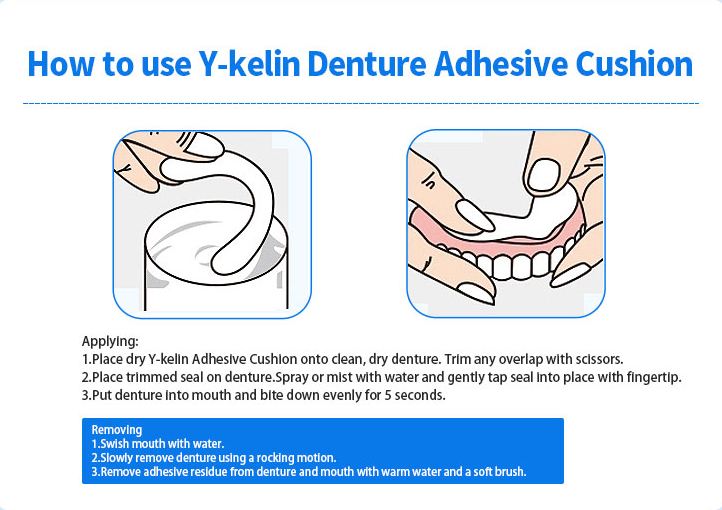
Denture Cushions


Key Features to Look for in a Strong Denture Adhesive

The Best Denture Adhesive for All-Day Wear

When choosing a denture adhesive for all-day wear, look for a formula that offers both strength and flexibility. The best denture adhesives will keep your dentures secure from morning to night, even during meals or while talking.

A strong adhesive will also provide a comfortable fit without the need for frequent reapplication. Whether you choose a cream, powder, or strip, make sure it’s designed for long-lasting hold and won’t cause discomfort over time.

The Science of Strength: Ingredients That Create a 12-Hour Hold

What actually makes an adhesive “strong”? It is not magic; it is high-molecular-weight chemistry. Premium denture adhesives rely on water-activated polymers that react with the patient’s saliva.

A clinical-grade strong hold is achieved through the precise blending of two core ingredients:

  1. Cellulose Gum (CMC – Carboxymethyl Cellulose): This ingredient is highly hydrophilic (water-loving). Upon contact with saliva, it hydrates and swells rapidly. CMC is responsible for the initial tack—that immediate stickiness that grabs the gums the second the denture is inserted.

  2. PVM/MA Copolymer: This is the heavy lifter for longevity. As it absorbs moisture, it transforms into a highly elastic and cohesive gel matrix. This matrix provides the long-term cohesive strength, resisting the dissolving effects of hot liquids (like coffee or soup) and absorbing the shock of chewing for 12 to 14 hours.

The Zinc Controversy: Balancing Strength and Safety

Historically, if you asked a dentist what the strongest denture adhesive was, they would point to products containing Zinc.

Zinc was added to legacy formulas because it enhances the cross-linking of the PVM/MA copolymers, creating an exceptionally rigid and strong grip. However, there is a dark side to this strength. Over-application and long-term swallowing of zinc-based adhesives can lead to zinc toxicity, which causes severe neurological issues, including numbness, tingling, and nerve damage.

The 2026 Modern Standard: Today, consumer safety is paramount. The strongest adhesive is no longer one that risks a patient’s health. At ITS Dental Care, our R&D team has engineered a premium Zinc-Free Denture Adhesive Cream. By substituting zinc with advanced calcium and sodium polymer chains, we have achieved an “Extra Strong” 12-hour hold that matches legacy zinc products but guarantees 100% daily safety.


Choosing the Best Denture Adhesive for Specific Needs

Best Denture Adhesive for Eating and Drinking

When choosing a denture adhesive for eating and drinking, it’s important to pick a product that offers a strong, waterproof hold.

Adhesives like Fixodent Ultra Hold and Poligrip Comfort Seal are designed to keep dentures securely in place, even when eating hot or cold foods or drinking liquids.

These adhesives are formulated to resist moisture and prevent slippage, allowing you to enjoy your meals without worrying about your dentures moving.

Look for products that promise all-day hold and comfort, especially if you plan to wear your dentures for extended periods during the day.

Denture Adhesive for Upper and Lower Dentures: Is There a Difference?

While denture adhesives can be used for both upper and lower dentures, there may be slight differences in the way they perform depending on the type of denture.

Upper dentures typically require a stronger hold because of the larger surface area in contact with the gums, and adhesives like Fixodent Plus or Super Poligrip are great for securing the upper denture all day.

For lower dentures, the adhesive needs to work against gravity and stay in place despite more movement. Products such as Secure Denture Adhesive or Ezo Denture Pads are designed to provide extra stability for lower dentures, offering a firmer hold and reducing slippage.

Be sure to choose the right adhesive for each type of denture for optimal comfort and security.

How to Apply Denture Adhesive for the Strongest Hold

Even the most scientifically advanced OEM adhesive will fail if the end-user applies it incorrectly. Brands must educate their customers on proper application to ensure maximum performance and positive product reviews.

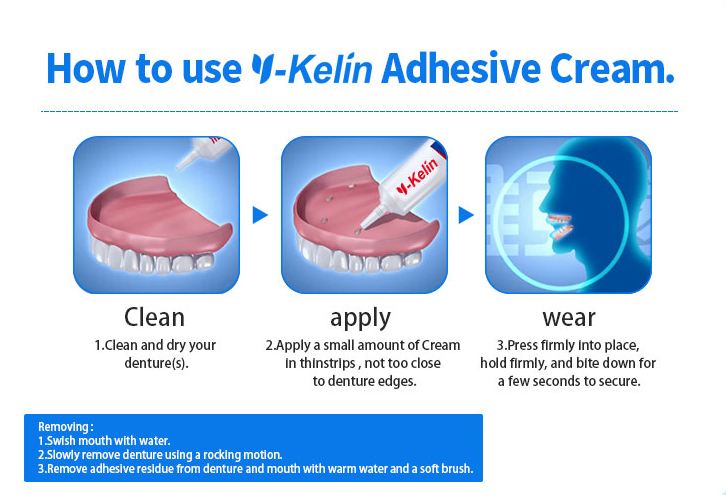
Step-by-Step Application Guide:

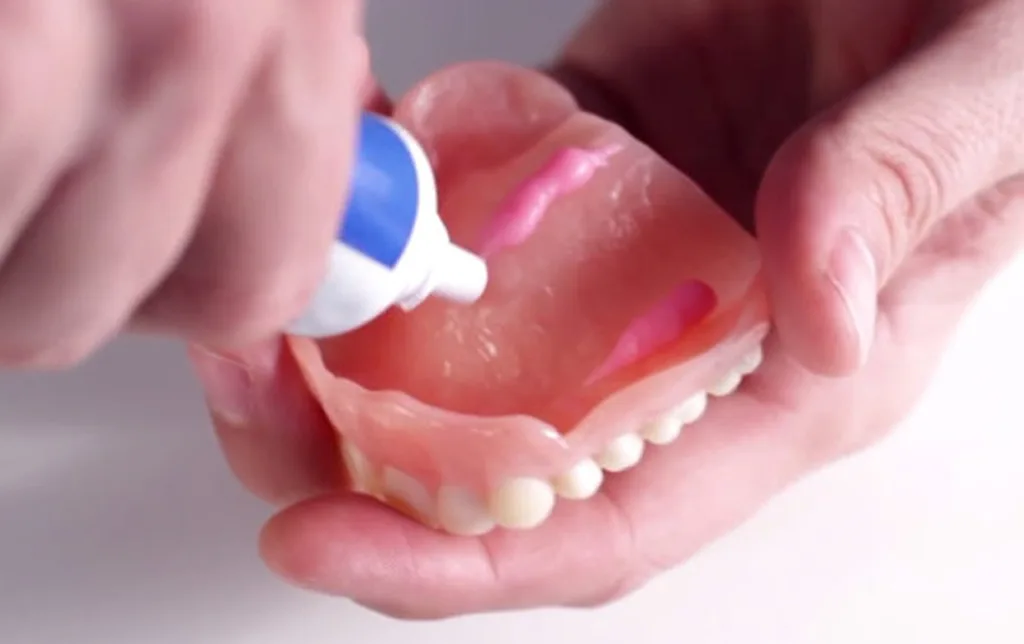
  • Step 1: Clean and Bone-Dry: The denture must be thoroughly cleaned and completely dried. Applying adhesive to a wet surface causes premature activation and drastically weakens the vacuum seal.

  • Step 2: Less is More: Apply the cream in small, pea-sized dots or short, continuous lines. Do not apply it too close to the edges. If the adhesive oozes out of the sides when biting down, the user has applied too much, which actually breaks the seal.

  • Step 3: Rinse the Mouth: The patient should quickly rinse their mouth with water before inserting the denture to ensure there is enough moisture to activate the polymers.

  • Step 4: Bite and Hold: Insert the denture and bite down firmly for 5 to 10 seconds. This pressure forces the cream to spread evenly into a micro-thin, powerful layer.

How to Use Denture adhesive Cream

How to Safely Remove Extra-Strong Adhesive

A common complaint with “extra strong” adhesives is that they are notoriously difficult to remove at night. Aggressive scrubbing can damage gum tissue and scratch the denture acrylic.

The Professional Removal Routine:

  1. Warm Water Swish: Swish comfortably warm water in the mouth for 30–60 seconds to soften the polymer matrix.

  2. The Rocking Method: Gently rock the denture side-to-side to break the vacuum seal. Never pull straight out.

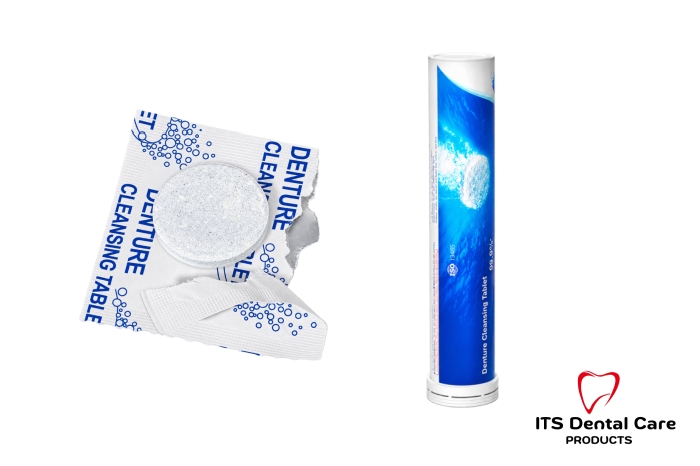
  3. Chemical Cleansing: Do not use regular toothpaste. Soak the denture in warm water with an Effervescent Denture Cleansing Tablet. The micro-bubbles will chemically dissolve the remaining adhesive residue without scratching the plastic.

  4. Gum Care: Use a soft, damp washcloth to gently wipe any remaining gel from the gums and the roof of the mouth.

When “Strong” Isn’t Enough: The Problem of Ill-Fitting Dentures

If a patient finds themselves needing to apply adhesive multiple times a day, or using excessive amounts just to keep the teeth in place, no adhesive in the world will be strong enough.

This is a medical issue, not a product failure. Due to natural bone resorption (the shrinking of the jawbone after tooth loss), dentures lose their custom fit over time. Adhesives are designed to enhance a well-fitting denture, not to act as a thick glue to fill massive gaps. Patients experiencing this must visit their dentist for a professional reline or a new set of dentures.

Partner with ITS Dental Care: Launch Your Extra-Strong Brand

Are you an oral care brand, dental distributor, or Amazon seller looking to capture market share with a superior product?

Stop reselling generic, weak, or unsafe zinc-based pastes. Partner with ITS Dental Care, the specialized OEM/ODM manufacturing engine behind the world’s leading oral care brands.

Our Factory Advantages:

  • Clinically Proven Strength: Our Zinc-Free PVM/MA Copolymer formula guarantees an all-day, food-seal hold.

  • Global Compliance: Manufactured in strictly controlled, ISO 13485, CE, and FDA-registered facilities.

  • Full Customization: We offer private label packaging, custom aluminum or plastic tubes (40g, 50g, 70g), and tailored flavor profiles (e.g., Fresh Mint or Flavor-Free).

Common Questions About Denture Adhesives (FAQ)

Can I drink hot coffee with strong denture adhesive?

Yes. Premium modern adhesives (like our PVM/MA copolymer blends) are specifically formulated to resist high temperatures, preventing the gel from dissolving when you consume hot coffee, tea, or soup.

No. Dentures must be removed every night to give your gum tissues a chance to breathe and recover. Leaving adhesive and dentures in overnight drastically increases the risk of bacterial infections and Denture Stomatitis.

Adhesive strength is highly dependent on hydration. If you are experiencing dry mouth (xerostomia) due to medications or dehydration, there may not be enough saliva to properly activate the polymers, leading to a weaker hold.

What is the Strongest Denture Adhesive on the Market?

Get in Touch with Us

Have questions or need more information? Contact us today, and our dedicated team will assist you promptly.

ITS Dental Care Logo

ITS Dental Care Products is a trusted manufacturer of high-quality denture care products, including denture cleaning tablets, adhesive creams, and retainer cleaning solutions, offering customized services for global partners.

Diverse Product Range

Customizable Solutions

Certified Quality

Manufacturing Facilities

Global Market Expertise

Timely and Reliable Deliveries

Contact Form

Ask For A Quick Quote!

Get A Detailed Reply In 24 Hours.

Pop Form