A request for quotation should do more than ask, “What is your price for denture cleaning tablets?” A vague request produces quotations based on different tablet weights, formulas, pack counts, packaging materials, tests, order quantities, and delivery terms. Those quotations cannot be compared fairly.
A complete denture cleaning tablets RFQ gives every shortlisted manufacturer the same commercial and technical brief. It also separates confirmed requirements from options that still need supplier advice, making the quotation easier to evaluate and turn into a controlled product specification.
The Short Answer: Make Every Supplier Quote the Same Product
A decision-ready RFQ should define twelve areas: buyer and project information, target market, intended product, tablet specification, formula and claims, pack configuration, artwork, quality and testing, documents, order volumes, schedule, and trade terms. Ask suppliers to identify every assumption, exclusion, one-time charge, MOQ constraint, and validity period.
Do not force a supplier to guess. If a requirement is undecided, write “supplier to recommend” and request clearly separated options. That preserves flexibility without making the quotations incomparable.
1. Start With Buyer and Project Information
Provide enough context for the manufacturer to select the correct formula, packaging route, documentation, and shipping assumptions. Confidential details can be shared after an NDA, but the initial RFQ still needs a defined project.
- Company and brand name, website, and buyer contact details.
- Buyer type: importer, distributor, pharmacy chain, dental supplier, retailer, or e-commerce brand.
- New launch, reformulation, supplier transfer, or repeat project.
- Target launch date, first-order objective, and estimated annual demand.
- Markets and sales channels: retail, clinics, Amazon/FBA, pharmacy, care facilities, or other channels.
2. Identify the Target Market and Regulatory Role
Name every country or region where the product will be sold. Requirements for classification, labeling, language, responsible parties, registration, claims, and supporting evidence can differ. Ask the supplier which documents are already available and which require new testing or local professional review.
- Country or region of sale and country of import.
- Brand owner, importer, distributor, responsible person, or other intended roles.
- Required label languages and any retailer-specific standards.
- Known product classification and applicable standards, if already confirmed by qualified counsel.
- Required registrations, notifications, certificates, or technical-file support.
Do not ask a supplier to guarantee legal compliance for an undefined market. Regulatory responsibility and final claims should be reviewed by the buyer’s qualified adviser for the destination.
3. Define the Exact Tablet Specification
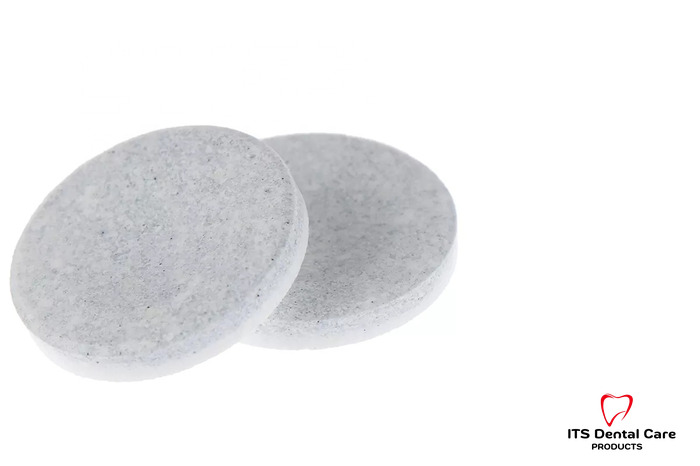
The product specification is the foundation of the quotation. ITS Dental Care’s denture cleaning tablet page shows common variables such as tablet appearance, weight, diameter, dissolution time, shelf life, and packaging. Specify the required values or ask for separate options.
| RFQ field | Buyer input | Supplier response |
|---|---|---|
| Tablet weight | Target grams or options | Actual tolerance and price effect |
| Shape and diameter | Round/other; target mm | Available tooling or tooling charge |
| Layers and color | Single/two layer; color reference | Feasibility and MOQ |
| Dissolution time | Fast, standard, or overnight | Test condition and typical result |
| Count per retail pack | For example 30/60/90/120 | Pack configuration and unit price |
| Shelf life | Target and minimum on delivery | Evidence and storage condition |
Include physical tolerances and acceptance criteria later in the signed specification. The RFQ stage should at least reveal whether each supplier is pricing the same tablet and pack.
4. Describe Formula, Performance, and Claims
State whether the project should use a proven standard formula, modify an existing formula, or develop a custom formula. A custom project may require additional raw materials, development rounds, validation, compatibility work, stability evidence, and higher minimums.
Formula inputs
- Preferred fragrance or flavor, color, and allergen or ingredient restrictions.
- Target appliance materials: full dentures, partial dentures, retainers, aligners, mouthguards, or combinations.
- Desired soak time, foaming profile, residue expectation, and odor-control objective.
- Ingredients or substances that must be included, excluded, or reviewed.
- Standard formula acceptable? If yes, ask the supplier to identify the available formula and evidence package.
Claims inputs
- Cleaning, stain-removal, odor, freshness, antimicrobial, material-compatibility, and timing claims under consideration.
- Evidence expected for each claim and whether testing must be performed by an independent laboratory.
- Exact organisms, soils, appliance materials, test conditions, and acceptance criteria where applicable.
- Clear instruction that final label claims require buyer approval and market-specific review.
Avoid copying strong claims from a catalog into the RFQ without defining the evidence required. Ask suppliers to separate currently supported claims from claims that would need new work.
5. Specify the Primary and Secondary Packaging
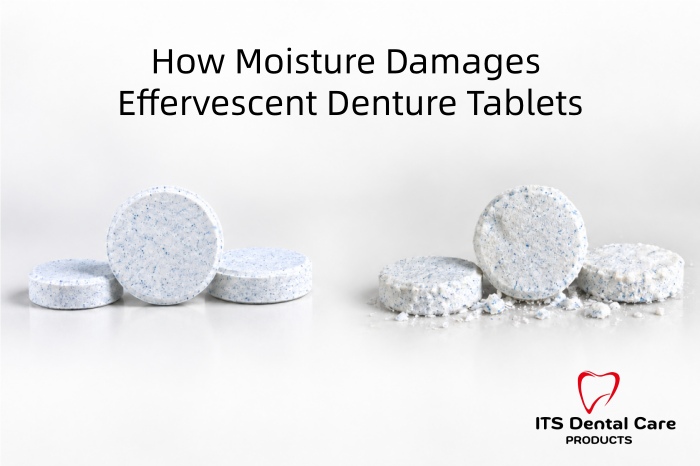
Packaging affects moisture protection, appearance, component MOQ, tooling, print setup, line compatibility, and freight. The MOQ guide for denture cleanser manufacturing explains why printed foil and retail cartons can set the practical order minimum even when tablet production could run at a lower quantity.
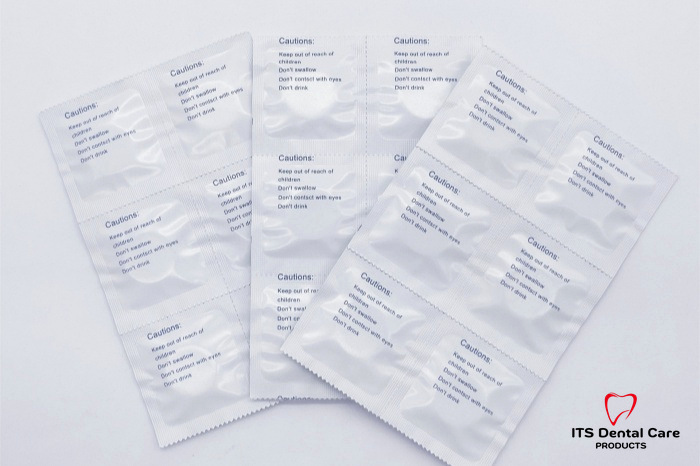
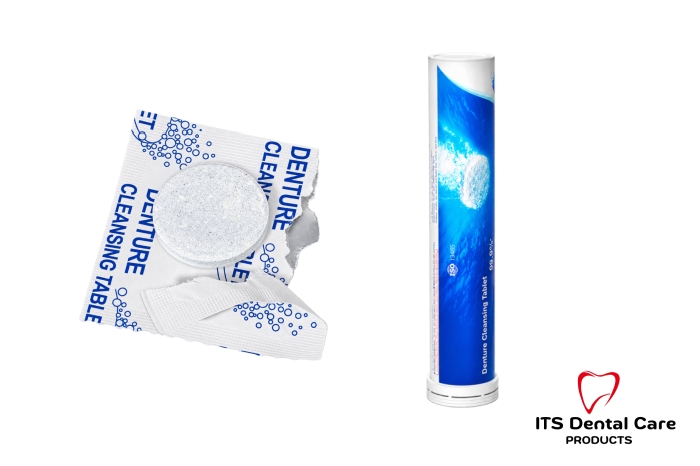
- Primary pack: individual foil sachets, strips, tubes, pouches, or another barrier system.
- Foil or film structure, printed or plain, opening method, number of colors, and required finish.
- Retail carton dimensions, board, finish, insert, label, tamper evidence, barcode, and coding area.
- Tablets per pack, packs per inner carton, inner cartons per master carton, and master-carton limits.
- Desiccant or closure requirements for tubes and other moisture-sensitive formats.
- Artwork ownership, dielines, proofing, printing plates/cylinders, tooling ownership, storage, and reuse.
6. State Artwork and Labeling Responsibilities
Tell suppliers whether the buyer will provide print-ready artwork or needs dielines, design support, translation, barcode setup, or regulatory-format assistance. Define who reviews content, who approves proofs, and what counts as final approval.
- Brand assets and print-ready file format.
- Required languages, warnings, directions, ingredient presentation, lot code, manufacture/expiry date, and company details.
- Barcode type and number source.
- Digital proof, physical proof, color standard, and signed artwork approval process.
- Change control: no printing or revision without documented buyer approval.
7. List Quality Controls and Required Testing
Ask suppliers to itemize tests included in the unit price, tests charged separately, tests performed per batch, periodic tests, and one-time development or validation tests. The final plan should match the product, claims, packaging, intended market, and risk.
| Control area | Examples to clarify |
|---|---|
| Incoming materials | Identity/status, supplier approval, COA review, sampling |
| In-process tablet checks | Appearance, weight, hardness/friability, dimensions |
| Performance | Dissolution, pH, cleaning, odor, compatibility, claim-specific tests |
| Microbiology | Specification, methods, frequency, external laboratory if needed |
| Packaging | Seal integrity, count, coding, artwork, reconciliation |
| Release | Finished-product specification, COA, reviewer, retained sample |
Request methods, acceptance criteria, sample quantity, laboratory identity, report language, turnaround time, and cost. “Testing included” is not precise enough.
8. Request the Correct Documents
Ask for documents by name and intended use instead of asking for “all certificates.” Confirm whether each document applies to the legal manufacturer, production site, exact product, formula, packaging, and destination market.
- Business license and manufacturer/site identification.
- Relevant quality-system certificates, scope, validity, and issuing body.
- Product specification, ingredient information, SDS, COA, and test reports.
- Batch traceability, change-control, complaint, and corrective-action support appropriate to the project.
- Country-of-origin, commercial, packing, shipping, and customs documents.
- Requested declarations or technical-file inputs, with language and legalization requirements.
The ITS Dental Care buyer FAQ can help buyers prepare common manufacturing, sample, customization, and ordering questions before issuing the RFQ.
9. Give Order Quantities as a Volume Ladder
Ask suppliers to quote the same specification at several realistic quantities. This exposes price breaks and shows which constraint is driven by formula batch size, printed foil, cartons, or a particular SKU.
- Sample quantity and sample charge.
- Pilot or first-commercial order quantity.
- Expected repeat order quantity.
- Estimated annual volume.
- Price tiers using the same specification—for example 10,000, 25,000, 50,000, and 100,000 retail packs.
- MOQ per formula, flavor, pack size, artwork version, language, and packaging component.
Also ask what happens to excess printed packaging: who buys it, owns it, stores it, audits inventory, and pays for disposal if artwork changes.
10. Define the Sampling and Approval Process
A quotation should distinguish existing stock samples, customized development samples, packaging mockups, pilot samples, and mass-production retention samples.
- Number of included sample rounds and cost for additional rounds.
- Information needed before formulation or sample preparation begins.
- Sample lead time and courier responsibility.
- Tests supplied with samples and differences between laboratory and mass-production equipment.
- Golden sample, written specification, artwork proof, and approval signatories.
11. Ask for a Stage-by-Stage Schedule
Do not accept a lead time without a start point. Request separate estimates for RFQ clarification, sample preparation, sample approval, artwork, packaging production, raw-material procurement, manufacturing, testing, release, and shipment readiness.
| Milestone | Supplier to state |
|---|---|
| Quotation | Validity period and clarification deadline |
| Samples | Start condition, number of rounds, dispatch date |
| Artwork/packaging | Dieline, proof, approval, print lead time |
| Production | Start condition and manufacturing window |
| Testing/release | Routine and additional test turnaround |
| Ready to ship | Inspection, documents, booking handover date |
12. Define Commercial Terms and the Price Boundary
State currency, requested Incoterm and named place, payment terms, destination, shipping mode, and quotation validity. Ask for a cost breakdown that separates recurring unit cost from one-time and optional charges.
- Product and packaging unit price and unit of measure.
- Samples, formulation, tooling, plates/cylinders, proofs, tests, inspection, pallet, and documentation charges.
- Incoterm, named place/port, export clearance, freight assumptions, and exclusions.
- Carton dimensions, net/gross weight, palletization, and estimated loading quantity.
- Deposit, balance trigger, bank fees, currency, credit terms, and refund/cancellation conditions.
- Price-adjustment triggers for materials, packaging, currency, freight, or specification changes.
A Copy-and-Paste RFQ Structure
Use the following structure in an email or spreadsheet attachment. Replace brackets with confirmed information and mark undecided fields “supplier to recommend.”
Project summary
- Buyer/company: [name, country, channel].
- Target market(s): [countries/regions].
- Launch target: [date].
- Estimated first order / annual volume: [quantities].
Product and packaging
- Tablet: [weight, diameter, layers, color, flavor, dissolution time, pack count].
- Formula: [standard/custom; restrictions; target appliance materials].
- Claims/evidence: [claims and required tests].
- Primary pack: [format, barrier, printing].
- Retail/master packaging: [components, configuration, coding, pallet].
Quality, documents, and commercial response
- Testing and release: [methods, criteria, frequency, COA].
- Documents: [certificate/report/declaration list].
- Samples: [type, rounds, timeline, courier].
- Price tiers and MOQs: [common quantities].
- Lead time: [milestone breakdown].
- Trade terms: [currency, Incoterm + named place, payment].
- Supplier must list assumptions, exclusions, optional charges, validity, and questions.
How to Evaluate the Replies
Transfer every supplier response into one comparison table. Mark each field confirmed, alternative proposed, not included, or not answered. Normalize cost per tablet, retail pack, and master carton, then calculate estimated landed cost using the same shipping assumption.
- Reject prices that cannot be connected to a defined specification.
- Investigate unexplained certificate, entity, site, formula, or packaging differences.
- Separate desirable options from mandatory requirements.
- Verify samples, documents, factory controls, and batch traceability before approval.
- Convert the final negotiated RFQ into a signed specification, quality agreement, artwork approval, and purchase order.
Common RFQ Mistakes
- Asking only for price per tablet.
- Leaving the tablet count, weight, formula, or packaging undefined.
- Requesting “FDA/CE/ISO documents” without specifying entity, product, market, or intended use.
- Using one MOQ for several flavors, pack sizes, or language versions.
- Accepting a lead time without approval milestones and a defined start point.
- Mixing EXW, FOB, CIF, or DDP prices without named places and written inclusions.
- Approving a strong marketing claim without agreeing on evidence and test conditions.
Final Takeaway
A strong RFQ reduces commercial surprises because it makes product, quality, documentation, packaging, timing, and price assumptions visible before supplier selection. Give every factory the same brief, request clearly separated options, and require written answers to every gap.
When your RFQ is ready, review the denture cleaning tablet options, understand how MOQ is created, and contact ITS Dental Care for a product-specific quotation. The goal is a comparable quotation that can become a controlled manufacturing project—not merely a low number in an email.


ITS Dental is a trusted manufacturer of high-quality denture care products, including denture cleaning tablets, adhesive creams, and retainer cleaning solutions, offering customized services for global partners.